
About the Study
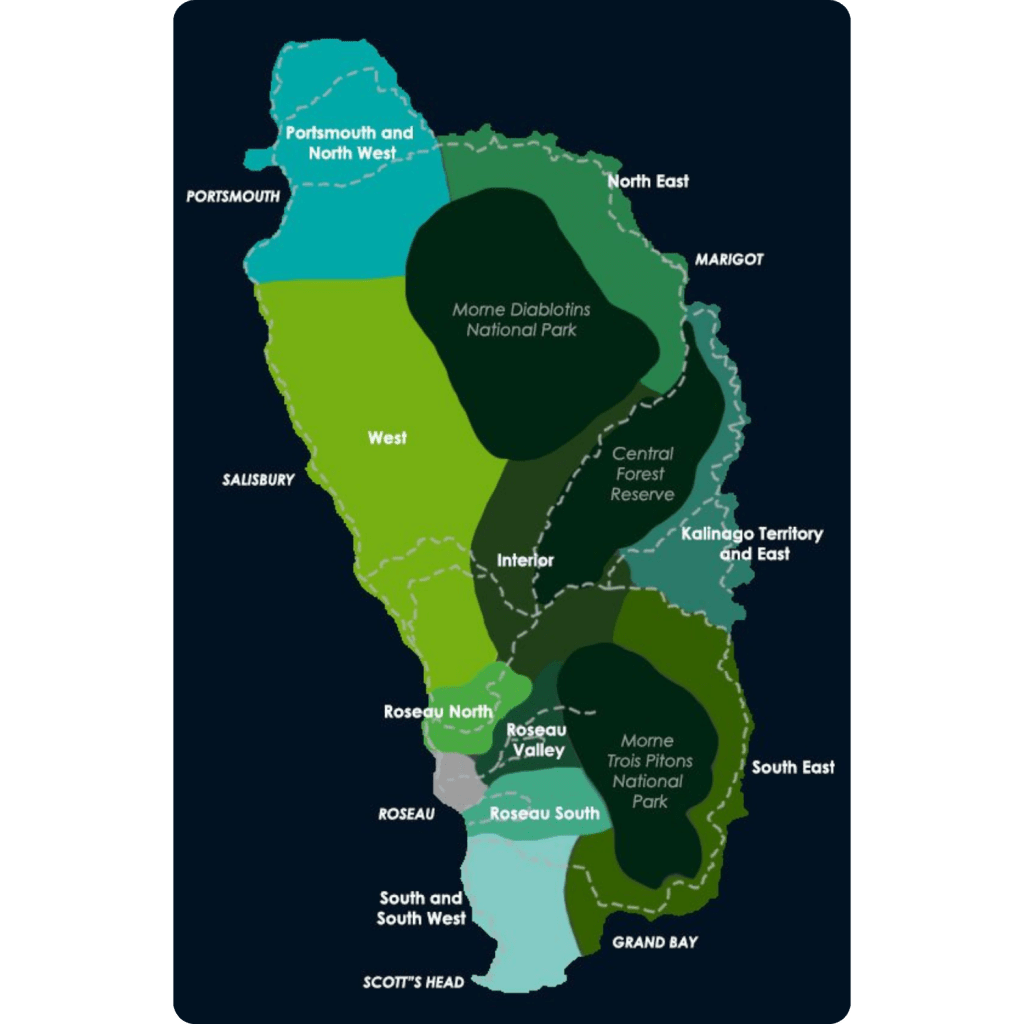
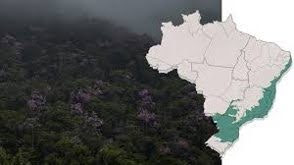
The Latin America and Caribbean (LAC) region is home to ~55 million Indigenous people. This shows about 9% of the global Indigenous population. Many countries in this region are low- and middle-income, with fragile economic and health systems. This makes Indigenous communities particularly vulnerable to challenges like high rates of substance use and suicide among youth.
Understanding the Challenges
Compounding these issues, environmental threats like deforestation and climate-related disasters have worsened existing mental health problems within these communities. Additionally, the disproportionate impact of the COVID-19 pandemic has made things worse.
Collaborative Approach
Our previous work in the LAC highlighted that Indigenous stakeholders believe multi-sectoral programs are a feasible and crucial way to promote holistic mental health. These programs, they emphasised, must integrate Indigenous worldviews and bolster the capacity of Indigenous schools and health systems to address the mental health needs of adolescents.
IMPACT
Overall Aim
To implement and evaluate a culturally adapted programme to improve Indigenous adolescent mental health in Brazil and Dominica
The Programme
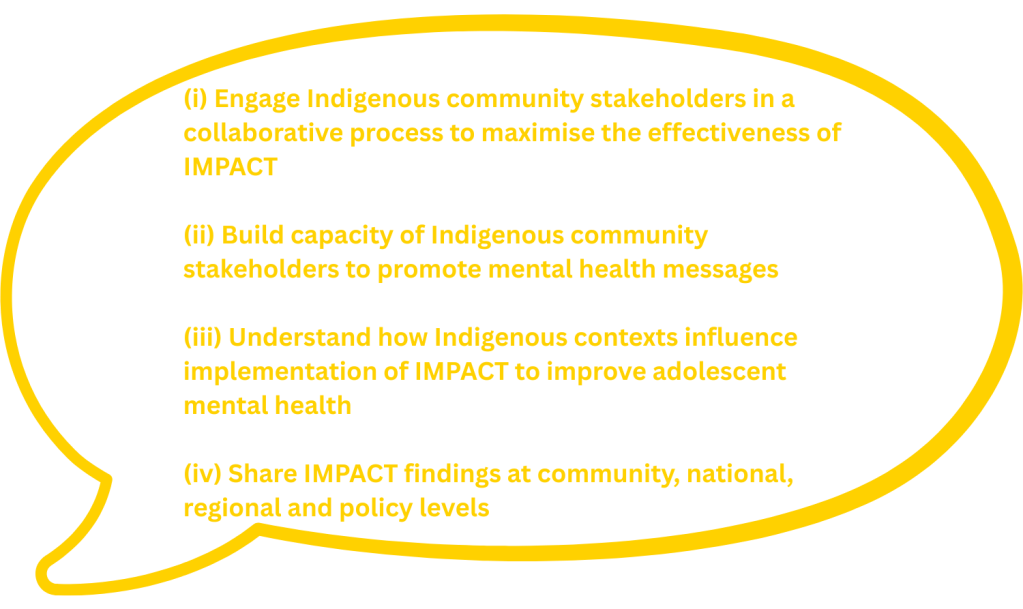
This initiative strengthens Indigenous adolescent mental health in Brazil and Dominica through culturally adapted training, stakeholder engagement, and youth-led knowledge exchange. It integrates local practices with global tools like mhGAP-IG, supports community implementers, and promotes scalable, evidence-based solutions.
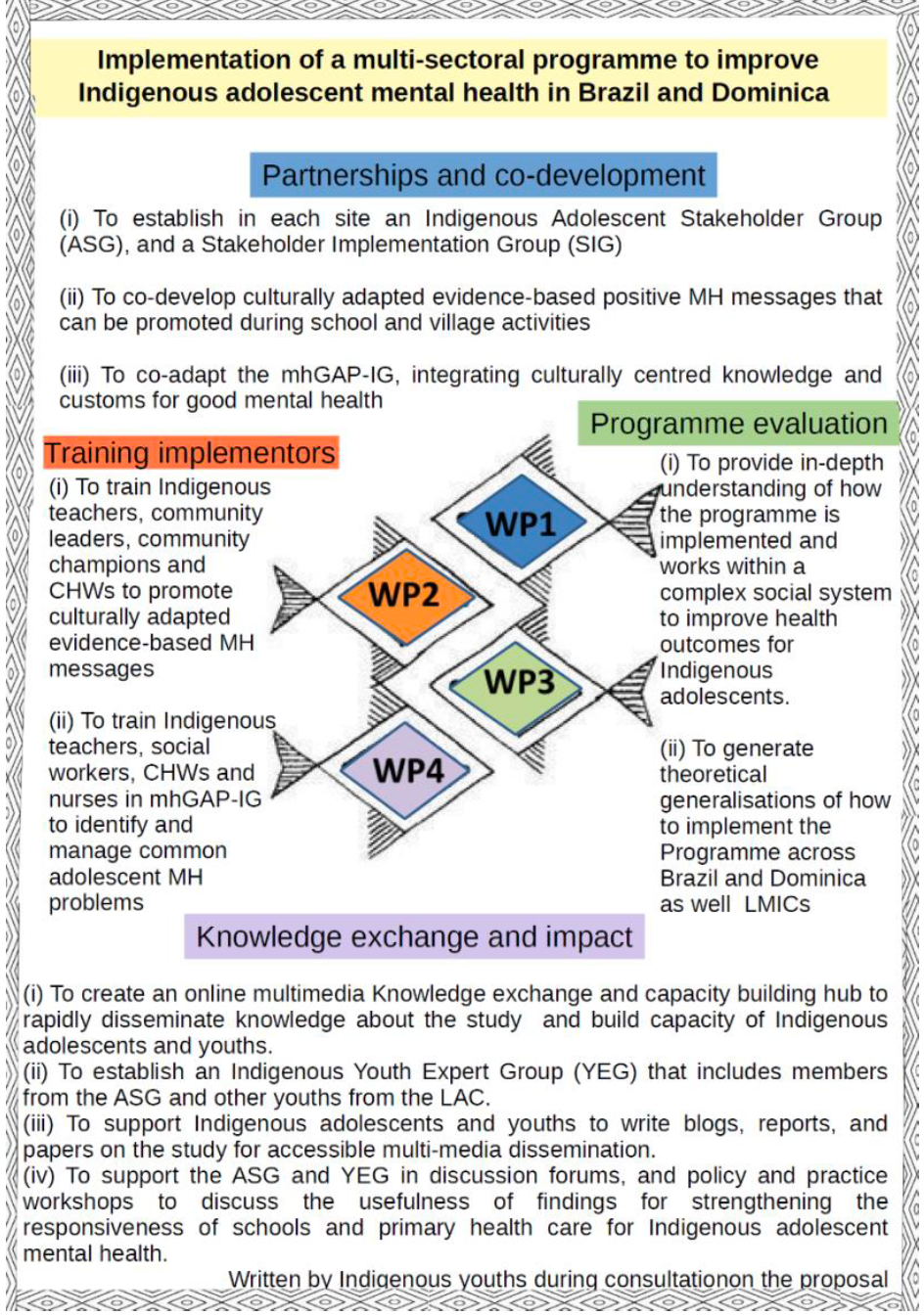
IMPACT includes Four Work Packages
WP1: Partnership and co-development: establish an Indigenous Adolescent Stakeholder Group (ASG) and a Stakeholder Implementation Group (SIG) at each site. These groups will support the co-development of mental health messages to be promoted during school and village activities and co-adapt the WHO’s Mental Health Gap Action Plan – Intervention Guides (mhGAP-IG) and Mental Health Gap Action Plan Community Toolkit integrating culturally centred knowledge and customs.
WP3: Programme evaluation: IMPACT will be implemented in schools and primary health care centres, it will reach ~1400 pupils aged 10-18 yrs. Using implementation research methods and systems thinking, we will evaluate IMPACT to gain an in-depth understanding of how Indigenous context affects processes and outcomes (including mental health outcomes, risk behaviours, general health). We will also conduct an economic evaluation of IMPACT.
WP2: Training implementers: train teachers, Indigenous community health workers and community champions to embed the mental health messages in school and community activities, and also train community health workers and primary health care staff to identify and manage common adolescent mental health problems.

WP4: Knowledge exchange and impact: We will support Indigenous adolescents to develop multi-media outputs, and support them and our implementation groups to use these findings to integrate IMPACT into their school curriculum and strengthen mental health care in primary care.
IMPACT focuses on the prevention of mental health disorders at a critical stage of the life course among Indigenous adolescents. Addressing health equity is also key . Nowhere is this more pertinent than for Indigenous adolescents who face the challenge of a legacy of social injustices and poor health. We are deeply aware that there has been a historic imposition of western-based research agendas on Indigenous communities. IMPACT uses participatory methodologies and knowledge co-production based on Indigenous worldviews. Longstanding partnerships between our research team and Indigenous communities allow us to explore an ambitious programme that spans education, health and community sectors.
 Impact